Treated Pine or Composite: What Actually Holds Up in East Texas
Two materials, one climate. Here's what actually changes over years of Longview humidity, sun and the occasional hard freeze.
September 4, 2026 · 3 min read
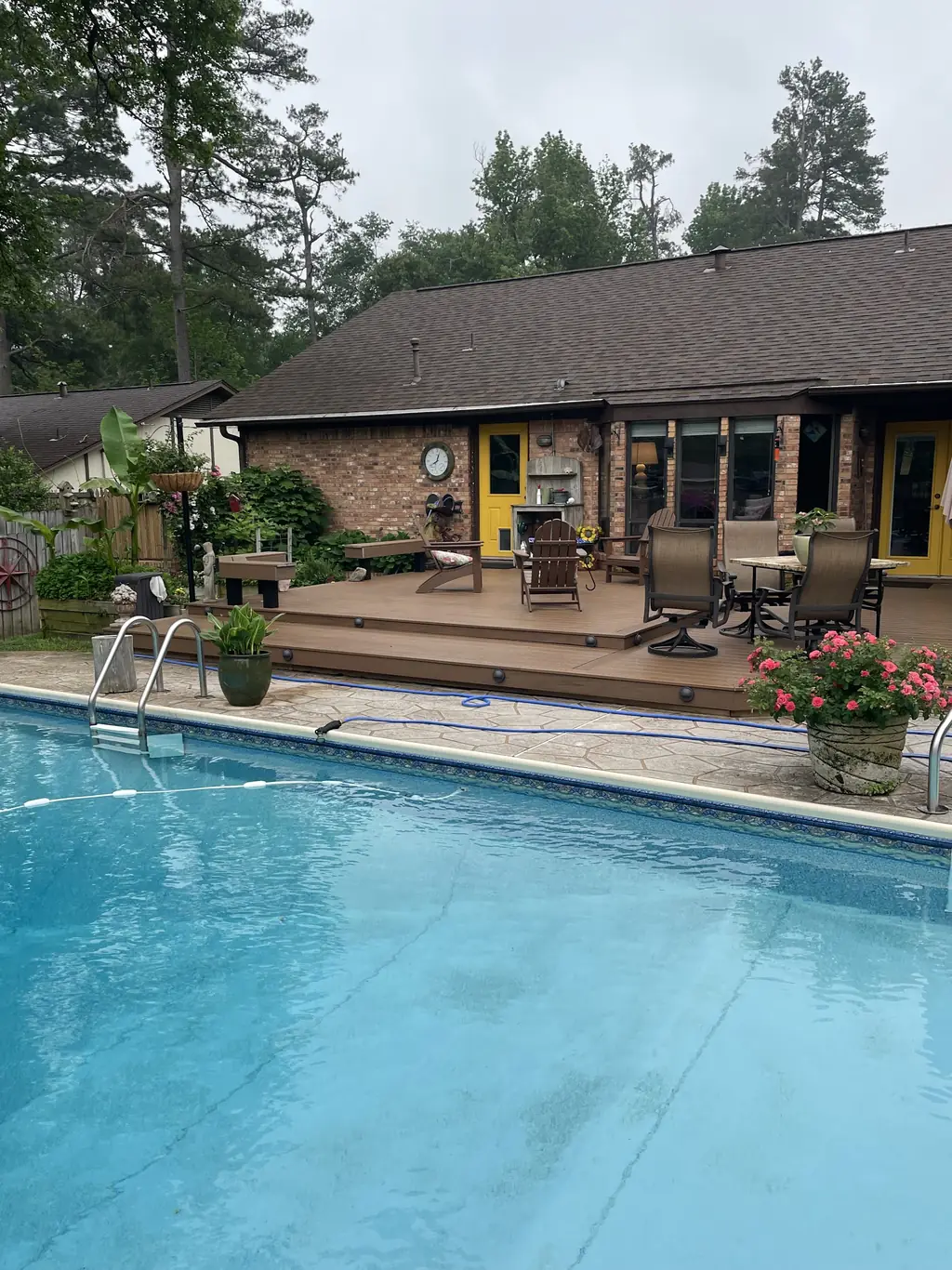
"Pine or composite" is close to the first question every homeowner asks once they've decided to build. We've been answering it since 2010, when the whole company started with a $385 four-by-four deck and a set of steps. Twenty thousand decks later, we still don't have one answer that fits everyone, because the honest answer depends on how much time you want to spend on the deck once it's finished, not just how much you want to spend building it.
What ground-contact treated pine actually gives you
Ground-contact treated yellow pine is the material most East Texas decks have been built from for decades, and for good reason. It's wood, so it looks and feels like a deck is supposed to. It costs less up front than composite, and a good builder working with it can shape stairs, rails and detail work that would run higher in composite. One of our reviews, from a customer named Johnny Robinson, calls this out directly. His crew "used all ground contact lumber yellow wood" throughout the build, and Brian finished the job with lighting worked into the rail posts. That's the kind of detail treated pine handles well, because it's a material carpenters have been cutting and shaping by hand for generations.
The tradeoff is upkeep. Pine moves. It absorbs water when it's wet and gives it back up when it dries, and East Texas puts it through that cycle constantly: a humid spring, a brutally dry August, then a hard freeze in January that can split a board that wasn't sealed going into winter. Left alone, a treated pine deck will gray, and depending on how it was built, boards can cup or crack near the fastener points over time. Staining or sealing it every couple of years keeps that in check. Skip it, and the deck still works. It just shows its age faster.
Where composite pulls ahead
Composite decking, the kind that includes brands like Trex, is built to skip most of that cycle. It doesn't absorb water the way pine does, so it doesn't swell, cup or split from humidity and freeze the same way. One of our customers, describing a deck we built for him, called the Trex decking "the way to go, hands down," after having it a few months. That's early praise, but it echoes what we hear from people further out from their build too: less time spent maintaining it, no restaining schedule to keep on, and a surface that resists staining from spilled drinks or grill grease better than raw wood does. Composite also gives you a less slippery surface underfoot when it's wet, which matters more than people expect the first time they're out on the deck barefoot after a rain.
The color holds, too. Composite is built with materials that are less likely to fade the way stained pine will under direct East Texas sun, especially on a deck that gets full afternoon exposure with no tree cover.
The real climate factor
None of this is about a mild climate somewhere else. Longview swings from thick summer humidity and pine pollen coating every flat surface each spring, to hard sun with no relief for weeks at a stretch, to the occasional real freeze that catches everyone off guard. Wood handles that by moving with it, expanding, contracting, and needing maintenance to stay ahead of it. Composite handles it by mostly not moving at all. Neither approach is wrong. It's a question of whether you'd rather spend an afternoon with a sealant brush every couple of years, or spend more up front and mostly leave the deck alone after that.
What we tell people who ask us straight
Every deck we build, pine or composite, carries a one-year warranty on the workmanship, and our composite builds carry that same one-year warranty on both the work and the materials. Because of the specialist rating we've earned with select manufacturers, including being named YellaWood Specialist of the Year, we're able to get better warranties on certain products than a lot of builders can offer their customers. So the honest advice isn't "always pick composite" or "pine is good enough." It's this: tell us how you actually want to spend your Saturdays once the deck is built, and we'll show you both materials in the 3D design before you commit to either one.
Longview Decks — (903) 308-0102
Call (903) 308-0102More articles
How Big Should Your Deck Actually Be?
The right deck size has nothing to do with the size of the house. It has to do with how many people are usually standing on it at once.
What Actually Happens Between Calling Us and Breaking Ground
You call, we measure, you see it in 3D before a single board gets cut. Here's what each step actually involves.