Built to skip the maintenance list
Composite Decks
Boards that don't splinter, don't need resealing every spring and hold their color through an East Texas summer. Composite systems, including Trex, built the same way every time.
Chapter 01
Why East Texas humidity makes the case for composite
Treated pine needs sealing on a schedule to survive the wet-dry swing East Texas gets every year, and skipping a season shows up fast as gray, splintering boards. Composite decking is manufactured to resist that cycle. It doesn't absorb water the way wood fiber does, so it isn't warping or graying the way a neglected pine deck does by its third or fourth summer.
The surface also handles direct sun better. Hard East Texas summer sun fades and dries out wood fiber over a few seasons; composite is built with materials less likely to fade, so a deck built in full sun still looks close to a deck built in shade five years later.
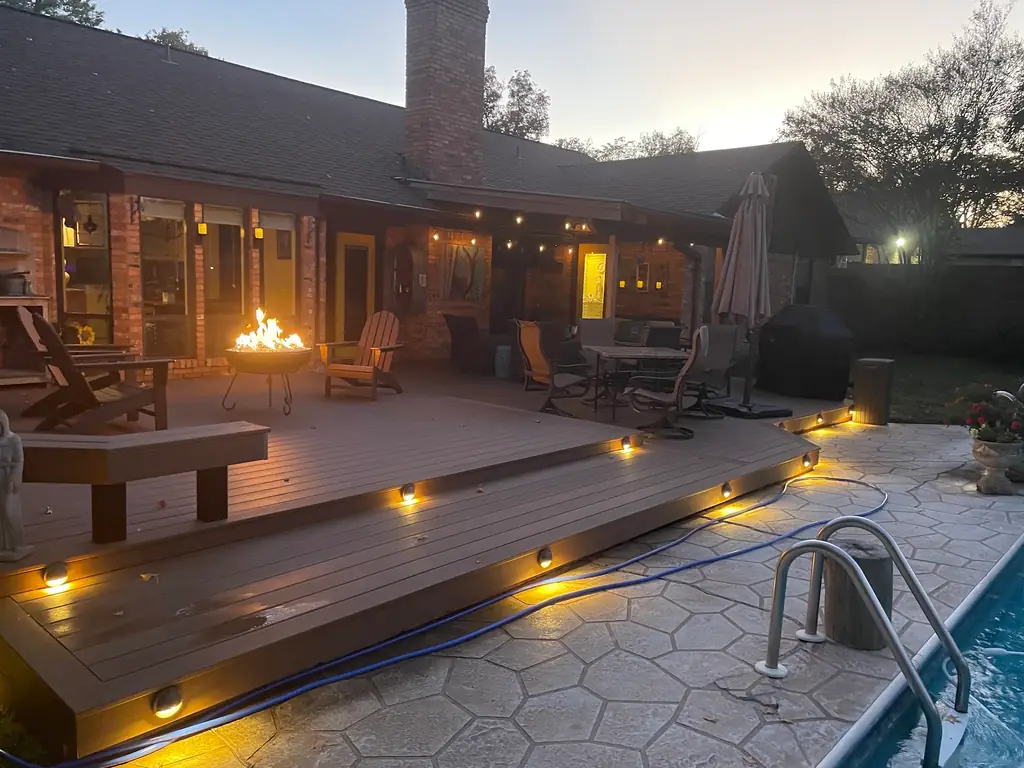
Dusk composite deck with lit riser lights, a live fire bowl and a pool beyond, built by Longview Decks
The Trex difference, in a customer's own words
Johnny Robinson's review calls it out directly: "the trex that Adam's team is the way to hands down... have had it a few months great stuff." Trex boards are made from reclaimed wood and recycled plastic, engineered to resist the staining, splintering and slippery surface plain wood picks up over time.
It looks like natural wood grain rather than plastic decking, which is usually the first thing people ask about before they commit to switching away from pine. The honest answer is that composite costs more per board up front, and the payback comes in the years of resealing and sanding it skips.
Chapter 03
Composite versus treated pine over ten years
A treated pine deck needs sanding and resealing roughly every one to two years to keep it from graying and splintering, and even with that upkeep it's usually being replaced somewhere in the eight to fifteen year range depending on how well it was maintained. Composite decking skips that maintenance cycle almost entirely and is built to outlast it.
The tradeoff is worth saying honestly: composite costs more to install than treated pine on the same footprint. Over ten years, most of that gap gets made up in the sealing, staining and board replacement a pine deck needs and a composite deck doesn't.
One warranty on the work and the product
Every composite deck carries a one-year warranty on both the work and the materials, and the same 3D design process applies before a board gets cut, whether it's treated pine or composite going down.
Financing through EnerBank USA at 7.99% APR over five years covers composite jobs the same as any other, and every estimate is free whether you already know you want composite or you're still deciding between the two. Calls and emails get a reply within 24 hours either way.
Longview Decks has built more than 20,000 decks since 2010 across East Texas, named YellaWood Specialist of the Year and rated A+ with the BBB. Every composite job gets a free on-site estimate. Call (903) 308-0102.