What Goes Under a Pool Deck Matters As Much As What's On Top
The surface you walk on and the enclosure underneath are two separate decisions. Both matter more around a pool than anywhere else in the yard.
September 4, 2026 · 4 min read
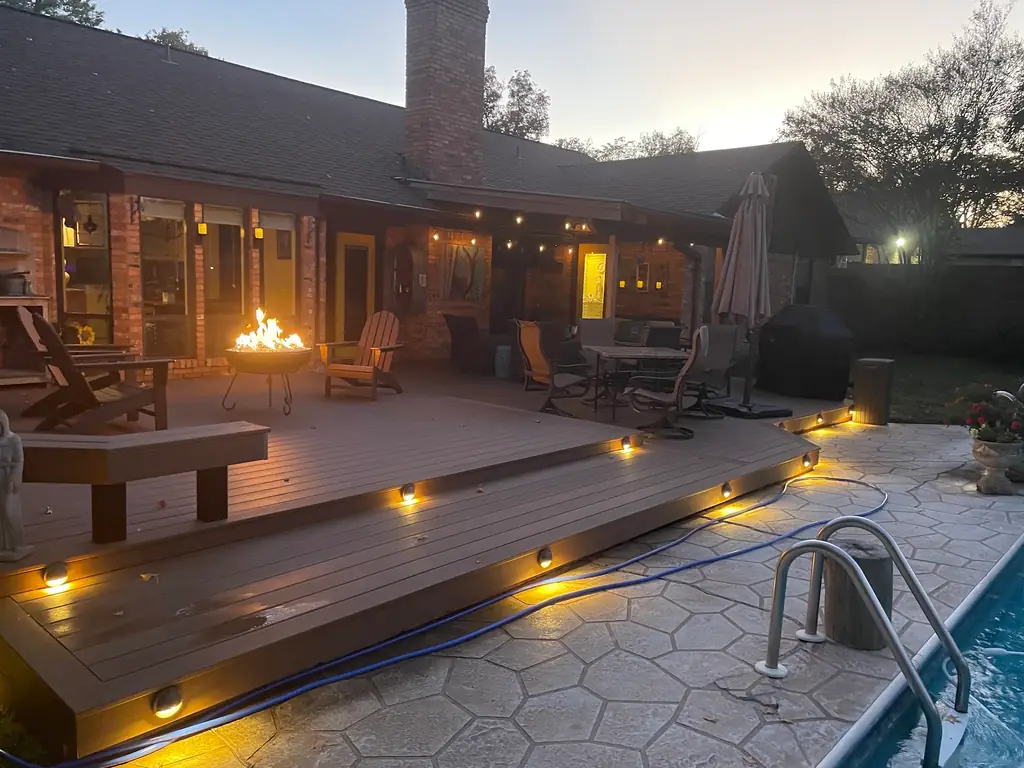
A pool deck gets asked to do more than a regular deck. It has to handle bare, wet feet at three in the afternoon in July, it has to shed water fast instead of holding it, and depending on the pool, it has to hide or enclose a structure underneath that isn't exactly built to be looked at. We build pool decks for both above-ground and in-ground pools, and the two big decisions, surface material and base enclosure, are worth separating out, because most people only think about the first one.
Surface temperature is a real problem in East Texas
A deck surface that sits in direct sun all afternoon gets hot enough to change how people actually use the pool. Dark, dense materials hold heat and stay hot well after the sun's moved past them. This is one of the practical reasons composite has become the more common choice around pools specifically, and it's worth thinking about lighter colors when you're picking composite for a pool deck, since lighter tones generally run cooler underfoot than darker ones in the same sun.
Slip resistance is not optional here
Every deck we build, pool or otherwise, comes with wood or cedar steel rails, but the surface underfoot is where slip resistance actually gets decided. A wet pool deck with a slick surface is a genuine hazard, especially with kids running the few feet between the water and a towel. This is part of why composite gets recommended for pool areas specifically. It's simpler to maintain and less slippery than some pressure-treated surfaces once they're wet. Pressure-treated lumber can still be the right call for a pool deck, particularly if the budget or the style calls for it, it just means paying more attention to the finish and texture used on top of it.
What's actually under the deck
This is the part almost nobody asks about until we bring it up. A raised pool deck, especially around an above-ground pool, has to enclose the space underneath, both for looks and so nobody's tempted to crawl under there. We build that base enclosure three main ways: treated lumber skirting that matches the deck above, a picket fence style enclosure, or lattice. Treated lumber gives the cleanest, most matched look but the least airflow. Lattice gives the most airflow and the most classic pool-deck look, which matters in a climate where trapped, damp air under a structure is exactly the kind of thing you don't want sitting there through a Texas summer. Picket fencing sits in between: more airflow than solid lumber, more structure than open lattice.
Above-ground pools and in-ground pools ask for different things
An above-ground pool sits proud of the ground, so the deck around it has to be built up to meet the pool's rim, which is exactly where the enclosure question comes from. It also usually means at least one set of stairs or a landing built specifically for pool access, sized and railed the same as any other deck stairway. An in-ground pool changes the problem. There's no gap underneath to enclose, so the deck sits closer to grade and the design attention shifts almost entirely to the surface itself, how it drains around the coping, how it handles the constant splash-out right at the pool's edge, and how far the composite or treated lumber extends before it meets grass or landscaping.
Add-ons worth thinking about early
A patio roof or a pergola over part of the pool deck changes how the space gets used, giving people shade to sit in without leaving the pool area entirely. Both work as add-ons to a pool deck build rather than separate projects, and it's easier and cheaper to plan them into the original 3D design than to add them after the deck's already built around a different layout. For a bigger pool deck project, the same EnerBank USA financing we offer on any build, 7.99% APR over five years, applies here too, which matters more on a pool deck than most other jobs since the surface, the rail and the enclosure all add up faster than a simple ground-level deck would.
Putting it together
A pool deck is really three decisions stacked on top of each other: the surface material, the rail, and the base enclosure. We build all three around your actual pool and your actual yard, whether that's an above-ground pool that needs the enclosure question answered clearly, or an in-ground pool where surface heat and slip resistance are doing most of the work. Bring us the pool as it sits now, and we'll walk you through what each option actually changes about how the deck feels to stand on.
Longview Decks — (903) 308-0102
Call (903) 308-0102More articles
Treated Pine or Composite: What Actually Holds Up in East Texas
Two materials, one climate. Here's what actually changes over years of Longview humidity, sun and the occasional hard freeze.
How Big Should Your Deck Actually Be?
The right deck size has nothing to do with the size of the house. It has to do with how many people are usually standing on it at once.